
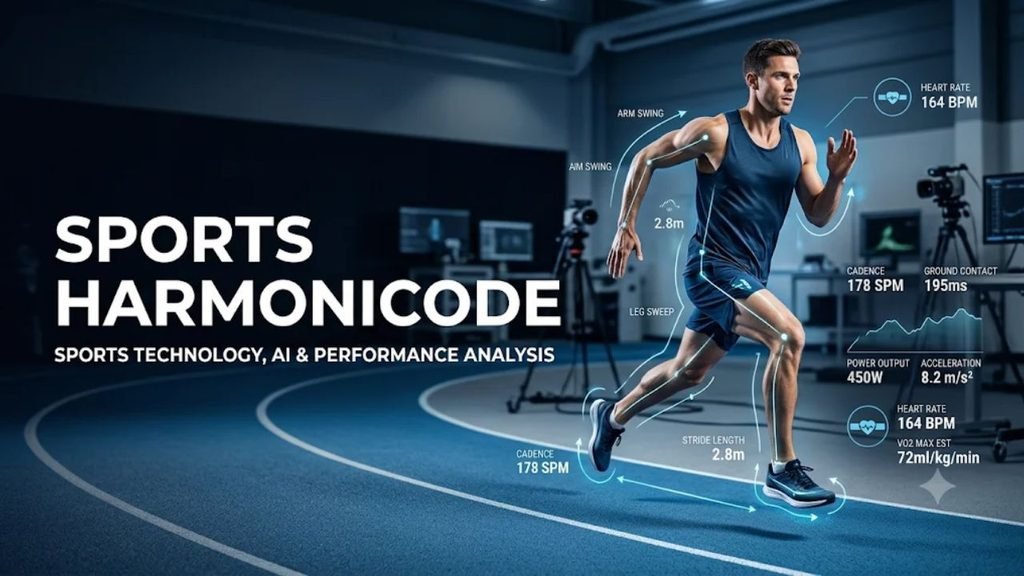
Sports technology is changing how athletes train, compete, and improve their performance. From artificial intelligence to wearable sensors, modern tools help coaches and players understand physical movements and analyze training results. One emerging search term in this area is Sports Harmonicode. It is associated online with sports analytics, biomechanics, movement analysis, and technology-driven training. Understanding this term requires looking at both its online meaning and the established technologies used in modern sports.
What Is Sports Harmonicode?
Sports Harmonicode is an online term associated with the combination of sports, technology, movement analysis, and athletic performance. It is commonly discussed in connection with ideas such as artificial intelligence, biomechanics, performance tracking, and data-driven training.
The term does not currently have one universally accepted scientific definition. It is also important not to confuse it with an officially recognized sport or a scientifically validated training system.
In a broader sports technology context, the concept can be understood through the use of data and digital tools to study how athletes move, train, and perform. Coaches can use performance information to understand an athlete’s strengths, identify areas that need improvement, and make more informed training decisions.
How Does Sports Harmonicode Work?
To understand Sports Harmonicode, it helps to explore how modern sports performance analysis works. Technology can collect information about an athlete’s movements, physical activity, and training performance.
Several processes are involved:
- Data Collection: Wearable devices, cameras, and tracking systems collect information about physical activity and movement.
- Movement Analysis: Software examines speed, balance, coordination, and body movements.
- Performance Monitoring: Coaches review training information to understand an athlete’s progress.
- Training Adjustments: Performance data can help coaches make informed decisions about exercise intensity and training methods.
These processes are already used in different areas of professional and amateur sports. However, they should not automatically be considered verified features of a specific Harmonicode product or platform.
Key Technologies Behind Sports Harmonicode
Several established technologies are relevant to the ideas associated with Sports Harmonicode.
1. Artificial Intelligence and Machine Learning
Artificial intelligence helps analyze large amounts of sports-related information. Machine learning systems can identify patterns in performance data and support coaches in evaluating athletes.
For example, AI-based video analysis can help examine running techniques, football movements, and player positioning.
2. Sports Biomechanics
Sports biomechanics studies how the human body moves during physical activities. It examines factors such as force, balance, posture, speed, and joint movement.
Athletes and coaches can use biomechanical assessments to understand movement techniques and identify areas that may need improvement.
3. Wearable Sports Technology
Wearable devices are increasingly common in sports training. Smartwatches, fitness trackers, and specialized sensors can collect information such as heart rate, movement, distance, and training intensity.
These devices help athletes and coaches monitor physical activity and review training progress.
4. Motion Tracking Technology
Motion tracking uses cameras, sensors, and specialized software to record body movements. It can help analyze running speed, jumping techniques, body positioning, and coordination.
This technology is useful in sports where movement accuracy and physical technique are important.
Benefits of Sports Harmonicode
Although Sports Harmonicode itself is not an established scientific training method, the sports technologies associated with the term offer several practical benefits.
Better Performance Analysis: Digital tools help coaches understand different aspects of athletic performance using measurable information.
Personalized Training: Performance records can help trainers adjust exercises according to an athlete’s abilities, goals, and progress.
Improved Movement Awareness: Video analysis and biomechanical assessments can help athletes understand their techniques and correct certain movement patterns.
Training Progress Monitoring: Wearable devices allow athletes to review activity levels and compare performance over time.
Informed Injury-Risk Management: Monitoring workload and movement patterns may help identify potential concerns. However, no tracking system can guarantee injury prevention.
Applications of Sports Harmonicode in Different Sports
Sports technology has applications across many athletic activities. Its relevance depends on the equipment, software, and type of performance analysis being used.
Football and Basketball
Football coaches can use video analysis to study player positioning, passing accuracy, running patterns, and team movement. Basketball teams can examine shooting techniques, jumping ability, defensive positioning, and player activity.
Cricket and Tennis
In cricket, video analysis can help study bowling actions, batting techniques, and fielding movements. Tennis players can use performance tracking to examine serving techniques, footwork, and court coverage.
Athletics and Fitness Training
Runners and athletes can use wearable sensors and motion analysis to monitor running speed, stride patterns, training intensity, and physical progress.
These examples demonstrate how established sports technologies can support athletes in different disciplines.
Role of AI in Sports Performance Analysis
Artificial intelligence is becoming an important part of modern sports analytics. It can process information from cameras, tracking systems, wearable devices, and performance databases.
AI-powered systems can help identify patterns that may be difficult to notice through manual observation alone. For example, video analysis software can assist coaches in reviewing player movements and evaluating technical performance.
However, AI-generated information should be reviewed by qualified coaches and sports professionals. Technology can support decision-making, but it cannot completely replace practical experience, physical assessments, or professional judgment.
Sports Harmonicode vs Traditional Sports Training
Traditional sports training mainly relies on coaching experience, physical exercises, practice sessions, and direct observation. Technology-based training adds another layer by providing measurable information.
| Traditional Sports Training | Technology-Based Training |
| Manual performance observation | Digital performance tracking |
| Coach-based feedback | Data-supported feedback |
| Physical practice sessions | Practice combined with analytics |
| Manual progress records | Digital training records |
| Visual technique assessment | Video and motion analysis |
Both approaches have value. The most effective training programs can combine experienced coaching with reliable performance data.
Challenges and Limitations of Sports Harmonicode
Sports technology also comes with certain limitations. Not every athlete or sports organization has access to advanced equipment and professional analysis systems.
Some common challenges include equipment costs, data accuracy, technical knowledge, and privacy concerns. Wearable devices may also produce incomplete or inaccurate readings depending on their quality and usage.
Another important limitation is the lack of a universally established definition for Sports Harmonicode. Readers should carefully evaluate claims about specific platforms, products, and performance benefits before relying on them.
Future of Sports Harmonicode
The future of sports technology is likely to involve more advanced AI systems, wearable sensors, motion tracking, and personalized performance analysis.
As these technologies develop, athletes may gain access to better tools for understanding their movements and monitoring training progress. Coaches may also benefit from improved data visualization and performance reporting.
Sports Harmonicode is an interesting search topic within this broader discussion, but its future as a specific technology or system remains uncertain.
Read More: Glossywise Com || EducationPeer.com || Who Owns Instagram
Frequently Asked Questions
1. What is Sports Harmonicode?
Sports Harmonicode is an online term associated with sports technology, biomechanics, movement analysis, and athletic performance.
2. Is Sports Harmonicode an officially recognized sport?
No. There is no established evidence that Sports Harmonicode is an officially recognized competitive sport.
3. How is AI used in sports training?
AI can analyze performance data, study player movements, support video analysis, and help coaches identify patterns.
4. Can sports technology improve athletic performance?
Yes. Properly used tracking and analysis tools can help athletes monitor progress, understand techniques, and make informed training adjustments.
5. What is sports biomechanics?
Sports biomechanics is the study of body movements and physical forces during sports activities and exercise.
6. Is Sports Harmonicode a proven technology?
The term does not have a universally accepted scientific definition, and specific claims about it should be independently verified.
Conclusion
Sports Harmonicode is an emerging online search term connected with sports technology, AI, biomechanics, and athletic performance. While the term itself is not a scientifically established training system, the technologies associated with it already play an important role in modern sports. Artificial intelligence, wearable devices, motion tracking, and performance analytics can help athletes and coaches make better-informed training decisions. Understanding the difference between established sports science and unverified claims is essential when exploring this topic.