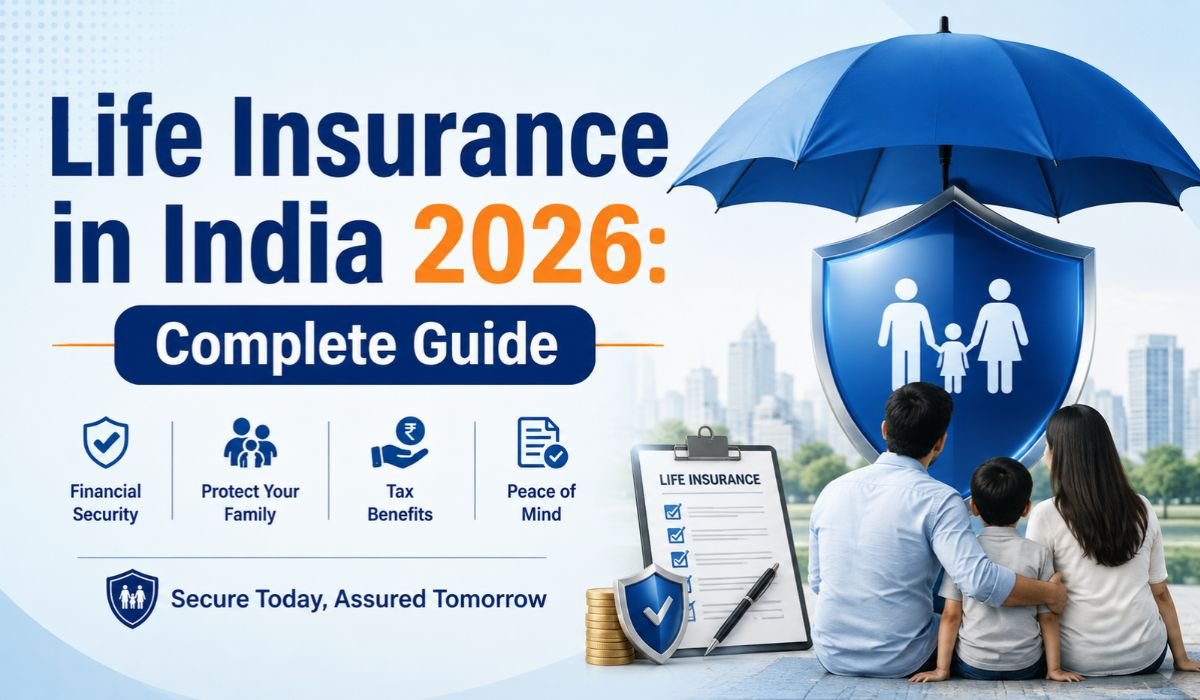
Life insurance policy is a contract between an insurer and a policyholder. By the year 2026, life insurance emerged as one of its best strengths for personal financial exercise at large in India. Life insurance is no longer an indulgence – it has become a fundamental need with exorbitant healthcare costs, increasing ambitions for capital formation and rising middle-class awareness.
The life insurance sector in India has undergone radical transformation over the last 10 years. Life insurance penetration in India is gradually climbing, propelled by increased digital adoption, regulatory reforms from Insurance Regulatory and Development Authority of India (IRDAI) and aggressive product innovation. As per the data available, life insurance penetration in India for last few years has remained less than 3.2% of GDP (against a global average), indicating a huge untapped opportunity!
Even in October 2023, Life insurance still remains the most trusted instrument for long-term wealth protection, best tax saving tool and family protection.
Types of Life Insurance Plans Available in India
Before purchasing any life insurance plan, it is important to understand the different types of plans. Below is a description of the five primary categories:
- Term Life Insurance The simplest and cheapest type of life insurance. It is a policy with big death benefits for a small premium. If the insured lives till the end of the policy term, there is no maturity benefit offered. Best suited for income coverage and family protection.
- Whole Life Insurance policy remains in force for the insured whole life. It provides a death benefit as well as savings, making it an effective long-term wealth transfer solution.
- Endowment Plans Life insurance that offers coverage for the duration of the policy and a maturity benefit if the insured survives or dies. These are ideal for target based savings
- Unit Linked Insurance Plans – ULIPs are market-linked life insurance products that offer an investment vehicle along with an insurance cover Part of the premium is for life, and another part goes into equity or debt funds.
- Money-Back Plans These life insurance policies make periodic payouts at regular intervals during the tenure of a policy, along with offering a death benefit and final maturity amount.
- Child Plans Tailor-Made Life insurance products that provide for a child’s future need in terms of education, marriage, etc., if the parent is not there.
- Pension/Retirement Plans These life insurance schemes aim to grow a retirement corpus and provide regular income after the individual reaches retirement age.
Key Life Insurance Statistics in India 2026
| Parameter | Data |
| Life Insurance Penetration (% of GDP) | ~3.5% (2026 estimate) |
| Number of Life Insurers in India | 24 |
| India’s Largest Insurer | Life Insurance Corporation (LIC) |
| IRDAI Claim Settlement Ratio (Top Insurers) | 97%–99.5% |
| Average Sum Assured (Term Plans) | ₹1 Crore – ₹2 Crore |
| Tax Benefit Under Section 80C | Up to ₹1.5 Lakh per year |
| Online Policy Buyers (2026) | 65%+ of new policies |
| Rural Life Insurance Penetration | 1.8% (approx.) |
Top Life Insurance Companies in India 2026
| Company | Claim Settlement Ratio | Market Share | Best Known For |
| LIC of India | 98.6% | ~61% | Trust, traditional plans |
| HDFC Life Insurance | 99.3% | ~8% | ULIPs, term plans |
| SBI Life Insurance | 97.5% | ~9% | Affordable premiums |
| ICICI Prudential Life | 98.1% | ~7% | Online term plans |
| Max Life Insurance | 99.5% | ~5% | High CSR, term plans |
| Bajaj Allianz Life | 98.0% | ~4% | Innovative products |
| Tata AIA Life | 99.0% | ~3% | Customer service |
How to Choose the Right Life Insurance Plan
In 2026 selecting the best life insurance coverage policy would involve multiple evaluations of one’s finances, goals and risk profile. Here are the critical factors:
- Evaluate the Coverage Requirements A general thumb rule states that one should have life insurance equal to at least 10–15 times – or higher if you wish to provide more for your family – your annual income. For instance, if your CTC is ₹8 lakhs per annum, then the best insurance cover sum assured would ideally be between ₹80 lakhs − ₹1.2 crore.
- In 2026 the process of comparing premiums is a lot simpler via aggregator portals like PolicyBazaar, Coverfox and direct from insurer websites.
- Find Claim Settlement Ratio( CSR)CSR means how many percentage of the claims insured by an insurer out of the total number of claims. Always prefer life insurance firms with a CSR larger than 97%.
- Scrutinize Documents of the Policy Every life insurance policy is meant with certain inclusions and exclusions. Be aware of waiting times, suicide clauses (usually excluded in the first year) including accidental death riders.
- Select The Right Policy Tenure Your insurance policy term should typically be until your retirement age or at the time when major financial responsibilities (home loan, children schooling) are complete.
Life Insurance Premiums: What Affects Your Rate?
| Factor | Impact on Life Insurance Premium |
| Age | Younger age = lower premium |
| Gender | Women often get lower premiums |
| Health Condition | Pre-existing illness increases premium |
| Smoking/Tobacco Use | Significantly increases premium |
| Occupation | High-risk jobs = higher premium |
| Sum Assured | Higher coverage = higher premium |
| Policy Term | Longer term = higher overall cost |
| Riders Added | Add-ons increase the base premium |
New IRDAI Regulations Affecting Life Insurance in 2026
Some of the key progressive reforms have been introduced by Insurance Regulatory and Development Authority of India (IRDAI), which are transforming life insurance landscape as below:
- Bima Sugam Platform :An integrated digital marketplace which enables customers to purchase and manage all life insurance policies at one place online – even in the remote areas of India.
- Enhancements to Surrender Value: The IRDAI has made improvements in surrender value standards for life insurance products, giving those who leave early fairer treatment.
- RBC: Transitioning to a stronger solvency framework that promotes long-term financial stability
- Streamlined KYC: As a result of Digital KYC and Aadhaar based verification, the issuance of life insurance policies is fast – sometimes within 24 hours
- Higher FDI: Investment from outside India in the measure of Foreign Direct Investment is increased in the protection industry enabling a greater amount of worldwide specialists to take part and contribute experience by working with Indian life safety net providers.
Tax Benefits of Life Insurance in India 2026
Tax Savings is, one of the strongest reasons that make millions of Indians buy life insurance plan. Here’s a breakdown:
| Tax Section | Benefit | Limit |
| Section 80C | Premium paid deduction | Up to ₹1.5 lakh per year |
| Section 10(10D) | Maturity/death benefit tax-free | Subject to conditions |
| Section 80D | Health rider premium deduction | Up to ₹25,000 additional |
| Section 80CCC | Pension plan premium | Part of 80C limit |
Best of pressnote: Please note that section 80C deductions can NOT avail anymore (new tax regime – post-2023 reforms.) Maturity proceeds of life insurance continue to be exempt under section 10(10D) as long as the premium did not exceed 10% of the sum assured.
Life Insurance Riders Worth Considering
Riders are supplemental benefits that can be tacked on to your primary life insurance policy, providing you with added protection:
- Accidental Death Benefit Rider – Payable if death occurs by poisoning or accident.
- Critical Illness Rider – one time payment if analysis of designated illnesses such as cancer, heart attack, stroke
- Waiver of the premium rider – future premiums are waived if the insured becomes disabled
- Type of Riders: Term Rider – Enhances death benefit for a limited period
It includes the Monthly Income Benefit Rider that delivers monthly income to a family following the passing of the policyholder.
Common Mistakes to Avoid When Buying Life Insurance
- Insuring too little – A lot of Indians are under-insured. Low Sum Assured Makes Family Vulnerable
- Concealment of health report – not revealing information about a claim will lead to repudiation. No exaggeration in the proposal life insurance form.
- Using life insurance just as tax-saver – Tax saving is a benefit but the main purpose of life insurance should be protection.
- Policy not reviewed in the long-term – Life stages change and your cover needs a review following marriage, childbirth or taking a home loan.
- Overlooking nomination update – Most policyholder overlook nomine updates after major life events.
Frequently Asked Questions
Q1. What is the minimum age to buy life insurance in India?
In India, the lowest age at which you can get most life insurance policies is 18 বছর। Certain child plans allow you to take a cover from Day 1 itself with the parent as the insured person.
Q2. Can NRIs buy life insurance in India
Yes, Non-Resident Indians (NRIs) can buy life insurance plans from Indian insurers. Depending on the terms of the insurer, premiums can be paid in INR or foreign currency and claims can get remitted abroad.
Q3. What happens if I miss a life insurance premium payment?
Many of life insurance plans provide you a grace period of 15 to 30 days after premium due date. In the absence of premium payment within the specified grace period, the policy will lapse. It essentially concedes the policy of a life insurance contract, but this can often be reinstated within a certain time frame (typically anywhere from 2–5 years) by paying back premiums plus interest.
Q4. Is the maturity amount from a life insurance policy taxable?
In general, maturity proceeds obtained from a life insurance policy are tax-exempt under Section 10(10D) of the Income Tax Act, provided that the annual premium does not exceed 10% of the sum assured (for policies issued after April 2012). Failure to fulfil this condition would result in taxable maturity amount as per your slab.
Q5. How is the claim settlement process for life insurance in India?
In the eventuality of the death of insured, nominee should approach insurer with death certificate, original policy document along with claim form and proof of identity. Most life insurance companies in India have to settle the claims within 30 days as per IRDAI rules. Should any investigation be necessary, this must be completed within a 90-day period.
Q6. What is the difference between term life insurance and whole life insurance?
Term life insurance only covers a specific time (relatively longer time in record, eg.: 20 or 30 years) and is only payed out if the insured dies while within that term. It has only the protective part with zero savings component, and provides the largest sum assured for that premium. Whole life insurance, on the other hand, provides coverage until death of the insured individual and there is an additional savings/cash value component to whole life that increases premiums dramatically.
Conclusion
Life insurance in India has become more accessible, affordable and diverse than ever before – in 2026. The changing perception coupled with digital reforms, improved infrastructure and enhanced financial literacy is transforming the outlook of our citizens regarding investing in life insurance as India moves towards a future where IRDAI proactively makes regulations responsive to the needs of an economy. No matter if you are a young professional, just starting your first job, as a parent planning for children, or looking forward to retirement; getting sufficient life insurance coverage is one of the most prudent money decisions I could recommend.
Do not procrastinate in getting life insurance – the younger and healthier you are when you buy it, the more favourable your premium will be. Begin with understanding your requirements, then, figure out plans over the internet & lastly choose reliable insurance provider which has already established a good claim settlement ratio. A life insurance policy is not just any plan; it is a promise of safeguarding the people you love to help them pursue their goals.
You can also explore the latest insurance updates and policy-related information at Corporate Insurance Policy.