As an owner of a vehicle, you play a specific role and among those to fulfil is the legal requirement such as insurance. Of all types of insurance coverage, the most primitive form of protection is third-party motor insurance, which is a legal need. If you own a car/bike/truck or any other motor vehicle, third-party motor insurance is the first thing that should be taken care of before driving on roads for all the right reasons. This article covers all you need to know about third-party motor insurance such as its definition, coverage, benefits, exclusions, factors affecting premium and claims process among other information.
What is Third-Party Motor Insurance?
Third-party motor insurance is a form of motor insurance that covers the insured against liabilities (injury or damage in case of an accident) to any third party caused by his vehicle. So in layman language, if your vehicle is the cause of an injury or death to another person (Third Party) or damage to Third party property, then your third-party motor insurance policy has you covered for the compensation to be paid. In this case, the “first party” is the insurer, the “second party” is the owner of that vehicle( policyholder), and any third party (any affected person in a road accident including pedestrians, other drivers, or property owners).
Third-party motor insurance excludes damage to your vehicle or injuries sustained by you. It is only for the benefit of the third party who suffers loss from your vehicle. This means third-party motor insurance is not really a protection on an all-round basis, but a liability only policy.
Why is Third-Party Motor Insurance Mandatory?
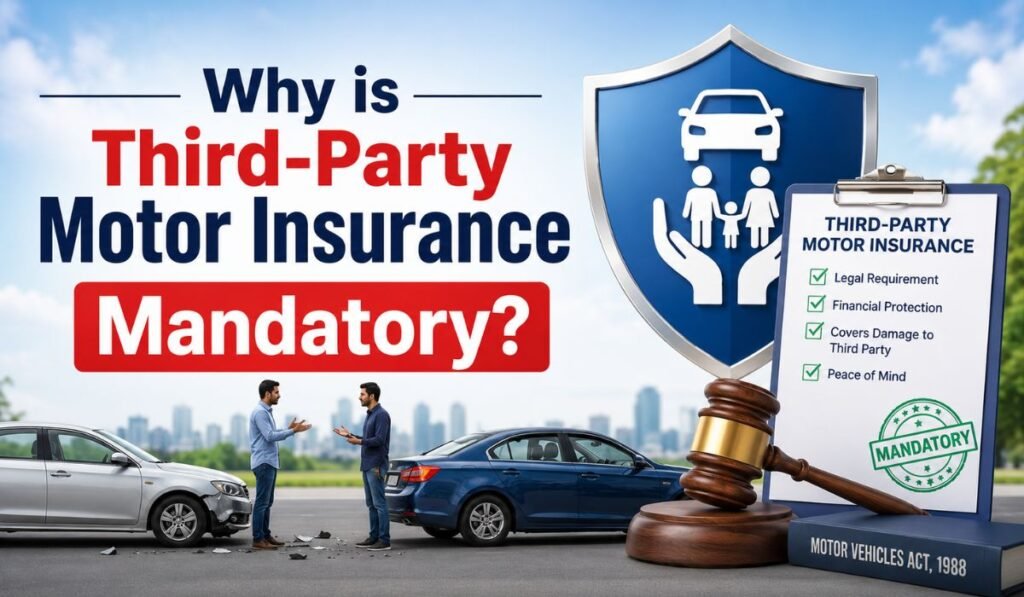
Third party motor insurance is mandatory in the Motor Vehicles Act in most countries including India. Owning a vehicle and failing to have valid third party motor insurance is a crime subject to fines or in some situations, imprisonment. The mandatory third party motor insurance which is enforced by law is to make certain that all accident victims are compensated adequately without the vehicle owner bearing the brunt of the financial burden.
An at-fault driver could be liable for unlimited amounts of injury, death and damage to other property without third party motor insurance. This can lead to major financial strain, including litigation and large compensation payments. Third-party motor insurance shields vehicle owners from such unforeseeable costs whilst not leaving victims with no means of recovery.
What Does Third-Party Motor Insurance Cover?
- Bodily Injuries or Death – In case your vehicle injures a third party or leads to their death, the compensation amount that you have to pay is often determined by a motor accident claims tribunal, which your policy takes care of.
- Property Damage: It provides coverage for the repair or replacement of property caused by your vehicle, such as another car, shop or house.
- Legal Liability: Third-party motor insurance will also cover against legal costs required to defend the claims made against you in the court of law.
Importantly property damage is typically a capped amount while liability for bodily injury or death may be unlimited depending on the rules of the particular state and/or policy.
What is Not Covered Under Third-Party Motor Insurance?
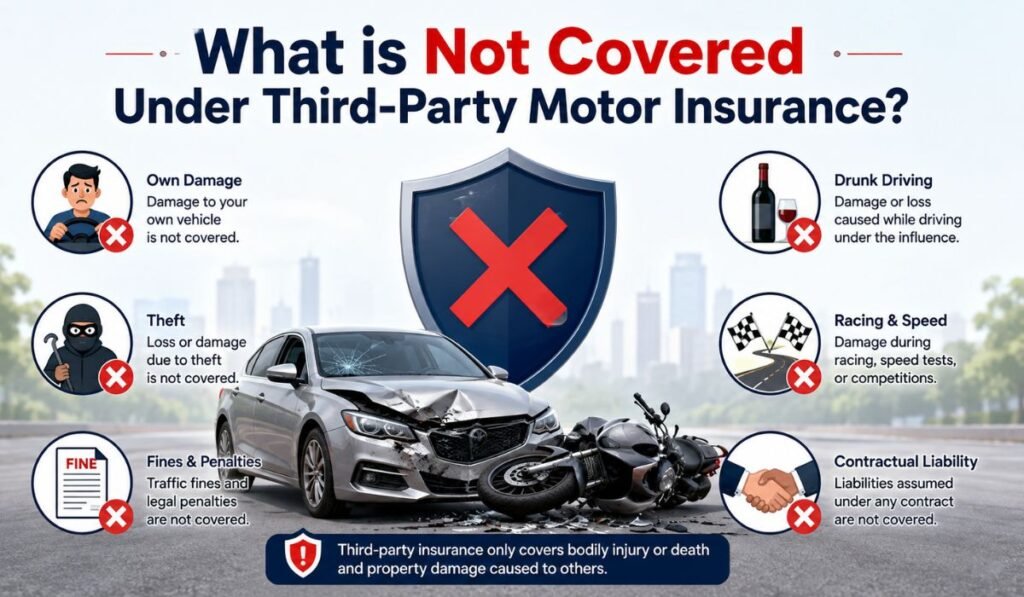
Though third-party motor insurance provides the basic cover, it comes with a lot of restrictions. The following are generally excluded:
- You are insured for the damage caused to your own vehicle in accidents, thefts, fire or natural calamites.
- Individual injury or death of the policy holder ( vehicle owner/driver)
- Damage while Driving Under Alcohol & Drive-Under DRUGS!
- Damage when you are driving without a valid licence
- Losses occurring due to driving outside the geographical area as defined by the policy
- Mechanical failure of the insured car or electrical component
Due to these exclusions, several car owners shift from a third-party motor insurance plan to a comprehensive policy for better coverage.
Third-Party Motor Insurance vs Comprehensive Motor Insurance
Knowing the difference between third-party motor cover and comprehensive insurance helps vehicle owners choose wisely. The following table summarizes the main differences:
| Feature | Third-Party Motor Insurance | Comprehensive Motor Insurance |
| Legal Requirement | Mandatory by law | Optional (but recommended) |
| Covers Third-Party Liability | Yes | Yes |
| Covers Own Vehicle Damage | No | Yes |
| Covers Theft | No | Yes |
| Covers Natural Calamities | No | Yes |
| Covers Personal Accident | No (add-on available) | Yes (often included) |
| Premium Cost | Lower | Higher |
| Add-on Covers Available | Limited | Extensive (zero depreciation, engine protect, roadside assistance, etc.) |
| Ideal For | Budget-conscious owners, older vehicles | New vehicles, high-value vehicles |
As reflected above, third-party motor insurance is inexpensive but has restricted protection, and comprehensive insurance covers all-round protection but at a higher premium.
Factors Affecting Third-Party Motor Insurance Premium
The third-party motor insurance premium is usually determined and updated on a yearly basis by the regulatory body while comprehensive insurance premiums vary according to various factors. But, certain factors continue to affect the total price of third-party motor insurance:
- Category of Vehicle: Private cars, two-wheelers and commercial vehicles attract different premium slabs for third-party motor insurance.
- Engine or Cubic Capacity( CC): The higher the capacity of a vehicle, the more expensive third-party motor insurance would be.
- Vehicle Age: Older vehicles could have unique premium structures compared to new ones.
- Geographical Zone: The risk classification for third-party motor insurance could differ based on the regions.
- Duration of Policy: Long-term third-party motor insurance policies (10-year) for renewals could be more economical than annual renewals.
Policyholders are however unable to negotiate any base price due to third-party motor insurance premiums being regulated; they can try and manage their costs by selecting the right tenure and vehicle category instead.
How to Buy Third-Party Motor Insurance
Buying third-party motor insurance is fairly easy now, thanks to online platforms. Here is a general process:
- Compare Insurers: Visit various insurance providers that provide third-party motor insurance and compare their services.
- Step 1 – Enter vehicle details Enter the registration number, make, model and engine capacity of your vehicle.
- Penalty For Driving Without Insurance – A penalty of -up to 25,000 will be imposed if you are caught driving without third-party motor insurance.
- Attach Additional Covers: Third party motor insurance is basic, but you can usually enhance it with a personal accident cover for the owner-driver.
- Payment: Pay online or offline and get your policy document on the same day.
- Download Policy Document – After you purchase the third-party motor insurance policy for verification, keep it digitally or physically.
How to Claim Third-Party Motor Insurance
If your car damages or injures (or kills) a third party due to an accident, then follow these steps:
- Notify The Insurer: Report the accident to your insurer as soon as possible.
- Vehicles involved in accidents must be reported to the police, where an FIR (First Information Report) is lodged giving particulars of the incident, with further affecting by injury or death.
- Submission of Documents: Provide relevant documents such as policy document, driving licence, registration certificate and copy of FIR
- Claims Tribunal Process: In most cases, the weekly motor claim for third-party claims (especially personal bodily injury or death) is adjudicated by a Motor Accident Claims Tribunal (MACT).
- Settlement: After confirming and approving the claim, the insurer settles directly with the third party or their legal representative.
It is essential to not take responsibility for the accident on-site and let the insurance company and legal process assign fault properly.
Benefits of Third-Party Motor Insurance
Though it has its limitations but a third-party motor insurance comes with several perks.
- Overriding Purpose: Legal Compliance: It helps Vehicle Owners to fulfil the compulsory insurance regulation for their vehicles and thus keeps them from being punished.
- Coverage against Financial Loss: This means this protects the policyholders from unlimited liability in case of accidents that involve third-party road users.
- Affordable: Third-party motor insurance cost is lower so it is accessible to all vehicle owners.
- Peace of Mind – Removes the anxiety of dealing with potential legal and financial ramifications after an accident.
- Simplicity: Easy to buy and renew via online insurance portals.
Conclusion
In addition, third-party motor insurance is not merely a legal formality; it plays an important role in protecting vehicle owners from major financial liabilities resulting from accidents. Although third-party motor insurance is not a policy that covers loss to your own vehicle, it provides security for those injured in a road accident and protects the negligent party from having unlimited liability. For maximum protection you get the full coverage policy with third-party motor insurance benefits. Now, basic third-party motor insurance plans or comprehensive ones – it all depends on you and your final choice makes positive sense as one cannot own a vehicle without valid insurance in place.
FAQs
1. Is third-party motor insurance mandatory for all vehicles?
Yes, third party motor insurance is a legal requirement for every motor vehicle running on public roads in most countries of the world including India as per Motor Vehicles Act.
2. Does third-party motor insurance cover damage to my own vehicle?
Third Party Motor Insurance does not cover the policyholder themself for damage, injury or loss of life It does not compensate you for the damages to your car.
3. What happens if I drive without third-party motor insurance?
Penalties for driving illegally without third-party motor insurance include potential fines, penalty points on your licence or even imprisonment under local traffic laws.
4. Can I upgrade from third-party motor insurance to comprehensive insurance later?
Yes, most of the insurers do allow you to upgrade your vehicle from a third-party motor insurance policy to a comprehensive policy at renewal time and in some cases also mid-term.
5. How is the premium for third-party motor insurance determined?
The premium mentioned for third-party motor insurance is typically regulated by a government body or the Insurance Regulatory and Development Authority of India (IRDAI) depending on vehicle category, engine size, policy duration, etc.
6. Is personal accident cover included in third-party motor insurance?
Standard third-party motor insurance does not cover personal accident for the owner-driver of the vehicle by default, however it can be bought as a mandatory add-on in certain countries.