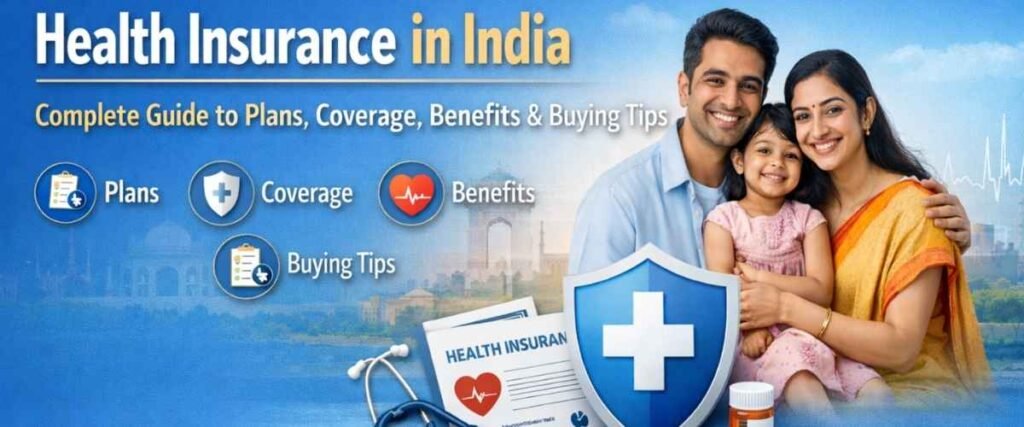






Medical emergencies are never predictable. One moment, you are in good health and managing your everyday life, and the next moment an unforeseen hospitalization can throw off your finances significantly. Health care in India is getting expensive day by day, and even a simple surgery cost you lakhs of rupees. This is where health insurance is more than a retirement financial product, but an essential necessity.
And health insurance is a protective shield. You get value for your money as it guarantees good medical attention to both you and your family without worrying about hospital bills in the future. Be it a sudden accident, critical illnesses, maternity expenses or regular hospitalization, an appropriate health insurance plan secures your financial status and mental peace.
Join us in this guide as we take a deep dive into health insurance in India — types of plans, extensive coverage options offered, claim process, and tax benefits. So here is an article to help you make informed choice and select the health insurance plan wisely.
Health insurance is a form of financial protection that helps you pay some medical expenses. You make a regular fixed payment known as premium, and in return the insurance company covers hospitalization, treatments, surgeries and other medical expenses according to the policy conditions. It shields you against expensive medical bills and surprise health emergencies. Simply put health insurance helps you to save money in medical emergency.
Health insurance is an agreement you make with an insurance company. You pay a constant fee known as premium, and the insurer then pays for your medical expenses until a particular limit. This includes hospitalization, surgeries, medical treatments and sometimes preventive care.
To put it very simply, health insurance saves your savings from becoming bloated due to hefty medical bills.
Health insurance acts primarily as a way to financially secure against sickness. In India, healthcare and prescription costs have zoomed; so a treatment that used to cost about ₹50,000 has reached around ₹2–3 lakh. In these circumstances, particularly when hospitals are outside of their network, families can be forced to rely on all savings, mortgages or the sale of assets just to meet expenses.
Health insurance protects us from being crushed by this financial burden by keeping you secure in the time of an emergency, allowing us to get admission into better hospitals and having your treatment done at an early stage, helping everyone remain stress-free.
Health insurance is very simple and structured by the way it works. First, you buy a policy, and select the coverage amount – which is also referred to as the sum insured. You pay an annual or monthly premium to keep the policy in force. You notify the insurance company when you require medical treatment and are hospitalized. The insurer may directly settle the hospital bill via a cashless facility, depending on the policy and hospital network. Alternatively, you will have to pay the expenses upfront and get them reimbursed by submitting documents later. This is how health insurance offers a systematic and economical means of monitoring the expenditure of money used to treat our body.
Paying hospital bills with your own money can negatively impact financial plans. When one big illness can decimate years of savings. Health insurance spreads that financial risk among thousands of policyholders.
It helps you not to pay in lakhs when emergencies arise – you rather manage some annual premium instead. That is the true power of health insurance.
When you buy a Individual Health Insurance, your premium amount is determined by certain factors as well, and they include your age, health status, medical history (if any), lifestyle habits and the sum-insured opted. In exchange, the insurance provider consents to pay a portion of your medical bills up to a certain amount throughout the term of your policy.
In case you need to avail medical treatment, you can either get cashless treatment at a network hospital or make payment on your own and later, claim reimbursement. It covers hospitalisation costs such as room rent, surgeries, medical treatment or drugs and diagnostic tests up to the sum assured of the policy.
The policy is generally renewed annually. If you renew the policy on time, your coverage lives on and some features like completion of the waiting period and cumulative bonus can grow with time.

India is seeing a steep rise in healthcare prices annually. Costs related to hospital beds, Intensive Care Units (ICUs), need for surgeries, diagnostic tests, and medicines have become exorbitantly higher, particularly in the case of private hospitals. A treatment that used to cost ₹50,000 can now easily go up to₹2–3 lakh. Such expenses can take a significant toll on your savings without health insurance. Health insurance protects you financially from this rising medical inflation.

Medical emergencies come without warning. Whether it’s an accident, heart problem or sudden illness, hospitals often demand that immediate deposits be made before treatment begins. This can be challenging, especially in stressful situations like this. Health insurance serves as your financial safety net, enabling you to concentrate on getting better rather than stressing out about money.

Another major benefit to health insurance purchase is tax savings. You can claim deductions paid for premiums paid (self, spouse, children and parents) under Section 80D of the Income Tax Act. Not only does this lower your taxable income, but it also protects your family’s health, so it’s like a win-win financial decision.

Most insurance companies have a large network of hospitals that they partner with. In case you are hospitalised in any of these network hospitals, treatment is cashless. In other words, the insurer pays the qualifying medical bills directly to the hospital and you don’t make payments in advance — unless they’re for non-covered expenses. This makes the entire treatment process much smoother and stress-free.

Under a family floater health insurance plan, you can cover several members of the family under one policy. This usually covers your spouse, children and sometimes dependent parents. This means that your entire family can be financially protected against medical emergencies without having to buy separate policies for every member.

Individual health insurance covers one person under a single policy. Meaning, the coverage amount cannot be used by anyone other than that individual and is only available for that person. This is perfect for anyone who needs specialized coverage based on their age, health condition and risk profile. The premiums are based on an individual’s age and medical history

Family floater covers many family members under the single policy with a common sum insured. It typically encompasses spouse, children and sometimes dependent parents. If just one member is admitted in a year, the entire coverage amount will be utilized for that individual. Cost-wise, this plan is cheaper than purchasing every individual a separate policy.

Health insurance for senior citizens is a specialized plan designed to cover the financial needs of seniors above 60 years of age. Since senior citizens are at impetus towards more health issues, these plans cover age-related diseases, the sum insured is usually higher, and in some cases may also have additional benefits such as an annual health check-ups. Because of the heightened health risks, premiums might be a bit higher.

As opposed to life insurance, critical illness insurance pays a lump sum, if the holder of the policy is diagnosed with one or more serious illnesses specified in the policy (eg cancer; heart attack; stroke; organ failure). The payout can go toward treatment, recovery or even daily expenses. This plan functions differently than typical health insurance, as it pays a set amount at diagnosis.

Group health insurance is typically provided by an employer to employees. It encompasses a population under one master policy. Such plans are generally inexpensive and may cover pre-existing diseases from day 1. But coverage generally ceases once a worker departs the organization.

Top-up and super top up plans are designed to offer extra coverage on an already existing health insurance cover. They kick in after a certain deductible threshold is passed. These plans can be beneficial, as they provide higher overall coverage are often less expensive in terms of premiums - particularly when medical costs reach the base policy limit.

Health insurance for maternity covers the expenses incurred during pregnancy, delivery (normal or cesarean), and in some cases newborn baby cover. Most plans have a waiting period before maternity coverage can be claimed. These plans are useful for couples who want to start a family and ensure they can pay the cost of delivery.

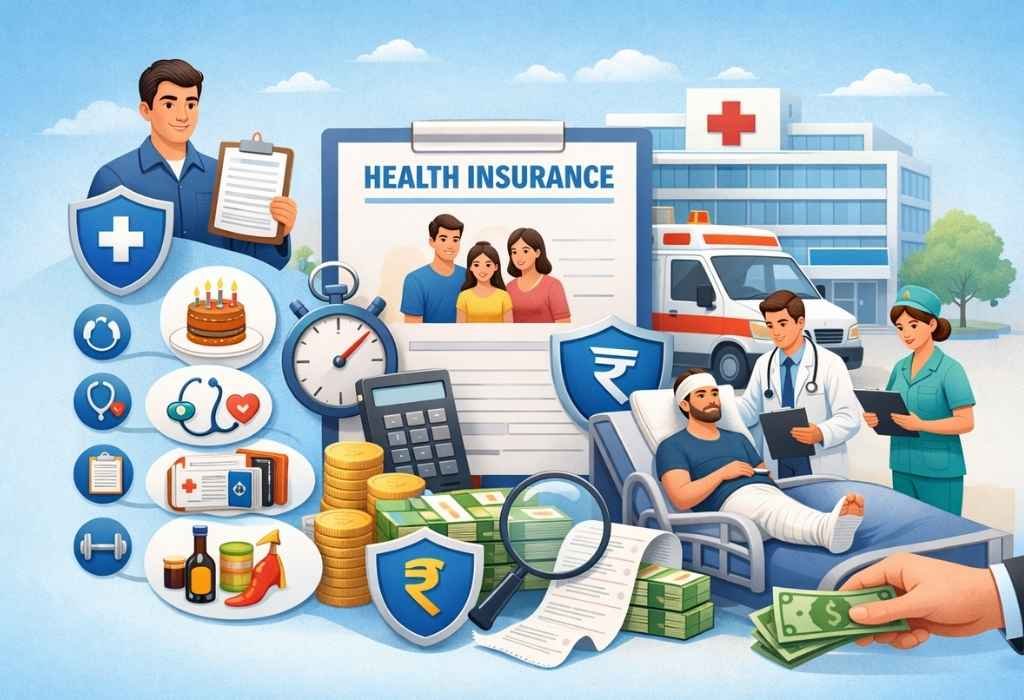
Most health insurance policies cover hospitalization, hence you are admitted to the hospital for more than 24 hours. This consists of room rent, ICU charges, doctor’s fees, nursing costs, medicines and diagnostic tests. It protects your savings from being depleted due to large expenses for treatment in times of distress.

Medical costs can accumulate long before going into the hospital and then after being released. Most health insurance plans cover pre-hospitalization expenses (typically 30–60 days before admission) and post-hospitalization expenses (60-90 days after discharge). This covers the tests, consultations and medicines involved in treating it.

A well-equipped hospital with highly experienced specialists is always required in the case of emergency patients, which become needed by ambulance services that often have to transfer people in a hurry to the hospital. Ans: All ambulance charges are covered by health insurance policy till the defined limit. This means you won't be charged extra in emergencies.

Most health insurance policies provide free annual health check-ups. Such preventive checkups help in early disease detection and promote regular health follow up. It encourages an early detection of potential health issues that may reduce the patients’ future risk for medical problems.

Thanks to new medical technology, many treatments no longer necessitate 24-hour stays. Operations such as cataract surgery, dialysis, chemotherapy and minor surgeries take only a few hours to complete. Health insurance attends such daycare procedures that help make modern treatments affordable.

If you do not file any claim in a particular policy year, the insurers offer you a No Claim Bonus. This typically augments your sum insured without a corresponding increase in the premium. As time goes on, NCB is vital because it increases your coverage for free.

As opposed to life insurance, critical illness insurance pays a lump sum, if the holder of the policy is diagnosed with one or more serious illnesses specified in the policy (eg cancer; heart attack; stroke; organ failure). The payout can go toward treatment, recovery or even daily expenses. This plan functions differently than typical health insurance, as it pays a set amount at diagnosis.

Health insurance is a policy which covers medical expenses of an individual in case he/she has fallen sick or faced with an accident resulting into hospitalization. Common inclusions are:
These additions help to cover most of the principal treatment-related fees under the individual policy.
Health insurance plans may be extensive, but there are some treatments and scenarios that typically fall outside of what is covered. Common exclusions include:
Being aware of both the inclusions and exclusions allows you to make an informed choice regarding your health insurance plan, and also helps you in avoiding surprises while settling claims.
Once you talk about what health insurance is and how it works, this makes it easier to choose the right policy and use your health insurance policy. Here’s a simple step-by-step explanation
Step 1: Compare Plans- Begin your search by comparing health insurance plans for coverage, sum insured, premium amount, waiting period, network hospitals and claim settlement ratio. Pick a plan that works for your budget and medical needs.
Step 2: Purchase policy online or offline- Health insurance can be purchased online via the insurer’s website or offline through an agent. Purchasing online is generally quicker and may provide savings, but purchasing off-line allows for interaction and direction.
Step 3: Pay Premium- You then pay the premium after you select the plan. It can be paid once a year, twice a year, four times a year or even monthly (depending on the insurer). Your policy gets activated after the defined waiting period (if any) once you make payment.
Step 4: Get Policy Documents- Once you pay the premium amount, you will be able to get policy documents that will mention aspects like coverage, exclusions, claim process, customer support and your policy number. Read the fine print carefully, to know all your benefits.
Step 5: Hospitalization Process- If you get hospitalized, notify the insurance company as soon as possible. This way, when treatment is planned, let them know ahead of time. Be notified within a set period of time for emergencies If you are in hospital, you can avail cashless treatment if the hospital is in the network by presenting your health insurance card.
Step 6: Claim Settlement (Cashless vs Reimbursement)- Claims are settled in two ways:
This easy process ensures that health insurance allows you to financially help yourself during medical emergencies without being disruptive to your savings.
The health insurance premium is the cost you pay to stay in good standing with your policy. Premium cost is another factor and insurers use several risk-related factors to calculate the premium. Knowing these factors helps you purchase the appropriate coverage at the correct price.
Age is one of the biggest factors in premium calculation. Younger people typically pay lower premiums because they’re deemed lower-risk. As one ages, the risk of getting any illness is much more higher which leads to a rise in the premiums. And that’s why it’s cheaper to purchase health insurance when you’re younger.
Your past and current health conditions matter a great deal. However, the premium could be higher if you have existing diseases such as diabetes, hypertension, heart conditions. Insurers evaluate your health records to predict the risk of future claims.
Higher the sum insured, higher is the premium. So, a ₹5 lakh policy will be cheaper than a ₹20 lakh one. How much coverage you need depends on your city, lifestyle and possible medical needs.
City to city healthcare costs differ. Metro cities like Delhi, Mumbai, or Bangalore have usually higher premiums as the medical treatments in such cities are far more expensive. Your location is one of the factors insurers take into account when determining the premium.
Lifestyle habits — smoking, drinking alcohol, are overweight or have dangerous jobs — can put their health at risk. Individuals with better lifestyles tend to receive lower premiums than those in higher risk profiles.
Add-ons (or riders) offer you additional coverage for things such as maternity cover, room rent waiver, critical illness cover or personal accident covers. Although they enrich coverage, they also raise the overall premium. Limiting optional extras helps keep the cost of up-spec to an agreeable level.
Now, before we start comparing, let’s first understand Mediclaim.
Mediclaim is a fundamental health insurance covering hospitalization expenses within a pre-defined limit. It primarily covers medical bills from hospital stays, surgeries and treatment. The coverage is limited in most cases and does not cover broader benefits like critical illness payout, maternity cover or wellness benefits(unless specifically added).
| Basis of Comparison | Health Insurance | Mediclaim |
|---|---|---|
| Coverage Scope | Comprehensive coverage including hospitalization, daycare, critical illness (in some plans), maternity, preventive checkups | Limited to hospitalization expenses only |
| Flexibility | Offers add-ons, riders, and customization options | Usually fixed benefits with limited customization |
| Sum Insured | Higher coverage options (₹5 lakh to ₹1 crore or more) | Generally lower coverage limits |
| Critical Illness Benefit | May include or offer as add-on | Not included in basic Mediclaim |
| Maternity Cover | Available in many plans | Usually not covered |
| Premium Cost | Slightly higher due to broader coverage | Lower compared to comprehensive health insurance |
| Cashless Facility | Available at network hospitals | Also available at network hospitals |
| Tax Benefit (80D) | Available | Available |
Important Aspects of Selecting the Right Health Insurance Plan Here are the most important considerations you should weigh before purchasing a policy:
Choose a sum insured that suits your healthcare needs and your city expenses. In smaller cities, ₹5 lakh may be enough but with the high medical costs in a metro city, having ₹10–20 lakh coverage is more realistic. In view of rising medical inflation, in most cases, you should go for higher cover.
Always check the list of network hospitals provided by an insurer. A large network helps you get cashless treatment in reputed hospitals close to your home. No. More hospitals meaning more business means more room for flexibility during an emergency.
The ratio of the number of claims settled by an insurer versus the total number of claims received. A better claim settlement ratio indicates it is more reliable and hes less complications while making a claim. Pick insurers with a good performance history.
Most of the health insurance policies have waiting periods for pre-existing diseases, maternity benefits or some specific illnesses. Cloak a roof [waiting period] to file and catch [you] off guard when you come in for the claim.” In general, shorter waiting periods are better.
Certain policies impose a sub-limit on the room rent, ICU charges or specific treatment. A co-pay means that you have to pay a specified percentage of the amount claimed from your pocket. Higher sub-limits and minimal co-pay options are not suitable for comprehensive coverage.
Add-ons like cover for critical illness, maternity benefits, waiver of room rent or personal accident cover can increase your policy benefits. However, they increase the premium. Only select riders that align with your health requirements and budget.
These considerations allow you to choose a healthcare insurance plan that maximizes coverage for the lowest premium cost.
Health insurance is not only for sick people. For everyone, everyone no matter who you are or what you do. Here’s who really ought to buy health insurance:
Young Professionals : The amount of the insurance should be enough to cover the cost for potential medical treatments in your city. Read the policy inclusions, exclusions, waiting periods and claim process minutely. A decent policy will provide a reasonable mix of affordability and coverage
Senior Citizens : Senior citizens increasingly need hospital treatment for age-related ailments. Senior citizen health insurance plans provide hospitalization, treatments, and regular health checkups coverage to make finances easier during the retirement years.
Business Owners : The self-employed and business owners do not have employer-provided health benefits. Personal health insurance means financial protection in case of medical emergencies without impacting the saving and cash flow for a business.
Frequent Travelers : Frequent travelers, whether for business or pleasure, can encounter sudden medical emergencies in other cities and even countries. Having health insurance helps guarantee you access to quality treatment and financial support wherever you need it.
Senior Citizens : Senior citizens increasingly need hospital treatment for age-related ailments. Senior citizen health insurance plans provide hospitalization, treatments, and regular health checkups coverage to make finances easier during the retirement years.
To put it more simply to a layman such as yourself, health insurance is our only shield against financial instabilities and soaring medical bills
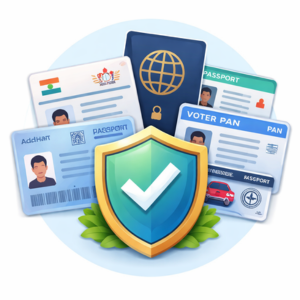
The purchase of health insurance is a no hassle task, yet you must furnish some primary documents for verification purposes. These documents assist the insurer in verifying your identity, age and medical history
You have to submit a valid identity proof like Aadhaar Card, PAN card, Passport, Voter ID & Driving Licence. This assists the insurance company in validating your identity and processing the policy.
Age being an important factor for premium calculation. Age proof can be done through documents like Aadhaar Card, Birth Certificate, Passport or 10th Marksheet.
It is a proof of Address to verify your residency. Aadhaar Card, Utility Bills, Passport, Rental Agreement documents are also usually accepted.
It could mean that you have to disclose your past and current medical conditions, continuing treatments or previous surgery. So, medical tests may be requested by the insurer in certain cases, especially for senior citizens or for larger coverage amounts before issuing a policy.
Having these documents handy will make the process of buying health insurance much easier and faster.
Purchasing health insurance is a significant financial decision. Most of the people tend to make small errors that may lead to complications during claim settlement. Avoid the following common mistakes:

Choosing a plan on the basis of having the lowest premium can be dangerous. The low-cost policies may have low coverage, a high co-pay, or sub-limits. If price is all you ever see, make sure to verify the benefits and coverage details

Most of the policies come with a waiting period for pre-existing diseases, maternity benefits or diseases. If you skip this clause, then when you really need coverage you may not have any. Always be aware of waiting period terms before you make a purchase.
All health insurance plans have exclusions, which may be due to cosmetic treatments, sports injuries, or certain diseases in the early years. If you do not read the exclusion list this can result in claim rejection at a later stage. Pay close attention to what is not included.

By selecting a low sum insured to save some premium, you might be exposing yourself to financial stress in case of major medical incidents. With healthcare prices going up, opt for adequate insurance (₹10–20 lakh in metro cities), rather than anything more.

If you’re just picking the first plan without comparing options, you might be missing out on better benefits. Always check coverage, claim settlement ratio, network hospitals, add-ons and premium before finalising one. Avoiding these common pitfalls helps ensure your health insurance protects you in the way you need it most.

Knowing the health insurance claim process allows for less confusion when medical emergencies arise. There are essentially two types of claims processes — cashless and reimbursement.
It is possible for an insurance company to settle the hospital bill directly with the network hospital in a cashless claim.
Steps involved:
1: Get yourself in a network hospital
2: Present your health insurance card or policy information at the insurance desk.
3: Complete a pre-authorization form (hospital normally assists here).
4: The hospital submits the request to the insurer for approval.
5: Once it is approved, the insurer pays for the eligible expenses directly.
6: You will pay only for uncovered charges, if any.
This process alleviates financial burden because large sums of money do not need to be available immediately.
In this method, you first pay the hospital bill and then claim the amount from insurance.
Steps involved:
1: Go to any hospital (in-network or out-of-network) for treatment.
2: When you are discharged, pay the full hospital bill.
3: You also need to collect all the original bills, discharge summary, prescriptions, and reports.
4: Forward the claim form and relevant documents to the insurer.
5: The insurer countersigns the documents and reimburses the admissible sum to your bank account.
This method comes in handy when cashless facility is not available.
Notify the insurance company immediately in case of hospitalization or if it is planned.
1: Submit complete and accurate documents.
2: Retain copies of all medical reports and bills.
3: Review Policy For Coverage & Exemptions Before Filing A Claim
4: Confirm treatment in network hospital for smooth cashless approval.
On following the right procedure, you will receive your claim faster and there won’t be any unnecessary delay.
To ensure that your health insurance continues to be active and uninterrupted, you need to understand the renewal rules, portability, and cancellation terms.
In the case of health insurance, it is typically a one-year policy that you need to renew before expiration. Renewal on time ensures uninterrupted coverage and the preservation of rewards such as No Claim Bonus (NCB) accumulation and credits for waiting periods.
Most insurers issue some sort of renewal reminder ahead of time. You only need to pay your renewal premium before the due date. If you renew on time, there is no gap in your coverage. If the renewal is delayed, accumulated benefits may be lost.
Portable insurance is a kind of health insurance that you can take from one insurer to another without losing existing earned benefits. Portability allows you to take certain benefits including the credits for existing waiting periods with your new insurer, and the No Claim Bonus if approved.
If you are dissatisfied with your current insurer’s claims settlement process, if your premium is suddenly too high, or you desire better coverage and improved features, this option is especially convenient. To gain insurance portability, however, you need to apply for it at least 45–60 days prior to your policy’s renewal date.
The grace period is extra time (usually 15–30 days) provided to pay the renewal premium after the policy expiry date. This allows for policy renewal during this time without losing continuity benefits.
But, claims are usually not accepted in the grace period. If you do not renew even in this grace period, the policy lapses. In these instances, you could lose accumulated advantages such as waiting period credits and No Claim Bonus, and would have to reinstate a new policy.
The safest way to ensure you have health insurance without a gap is always going to be renewing your policy in a timely manner.
In addition to securing you medically, health insurance also offers tax benefits as per the Indian tax laws.
The amount of premiums paid for health insurance is deducted from tax under Section 80D of the Income Tax Act. This contribution is deductible, lowering your taxable income and ultimately saving you money while protecting your health.
Under the overall limit of 80D, you can additionally claim up to ₹5,000 for preventive health check-ups.
The premium should be paid by non-cash modes such as UPI, debit card, credit card, net banking and cheque to avail tax benefits. (Payment can be made in cash for preventive health check-up.)
Individual health insurance is an effective way to protect your health and financial future. It allows you to protect yourself with full-coverage, strength and peace of mind in the case of medical issues. Though it may be more expensive than shared policies, the advantages of having dedicated coverage often outweigh the cost.
By opting for the right policy early with a clear understanding of its terms, long term protection from increasing healthcare costs can be ensured. Health insurance is more than just a cost, it’s an investment in your health and future.
Health insurance is an agreement through which you pay a premium to the insurer so that they will cover your medical costs like hospitalization, surgeries, medicines, and treatments.
Whether you are a young professional, family man/woman, senior citizen or self-employed person, everyone should look into buying health insurance. Updates: More recent medical emergencies can strike at any age.
This ideal sum insured varies according to your city and lifestyle. Across the board, ₹5 lakh is pure basic coverage and ₹10–20 lakh is ideal for metro cities as costs tend to be higher.
A waiting period is the time it takes before some diseases or pre-existing conditions are covered. It depends on the policy.
Cashless treatment helps you get treated at a network hospital without paying the total bill beforehand. The insurer pays the hospital in-network directly for that eligible amount.
Yes, but only after the wait time specified in the policy terms.
Health Insurance with Government health policy for parents Yes, you can buy a family floater plan or senior citizen health insurance for your parents.
That all depends on your age, coverage amount and medical history. In some situations, a pre-policy medical test may be needed by insurers.
Yes, through insurance portability. When you renew, if approved, you can change insurers and not lose some of the benefits.
Yes, premiums paid qualify for a tax deduction as per Section 80D of the Income Tax Act subject to specified limits.
Super Star Value is a health insurance product designed to provide extensive medical coverage at a low price. It includes hospitalization, daycare procedures, and pre-and post-hospitalization expenses, making it easier to handle rising healthcare costs
Who It’s Best For: Those in search of a budget-friendly plan that offers robust restoration services.
Ultimate Care (direct) Ultimate Care is a full-coverage health plan that will give strong protection against medical emergencies. It provides hospitalization, advanced treatment procedure coverage, daycare procedures
Who It’s Best For: Someone who wants coverage that is greater than basic benefits.
ReAssure 3.0 Elite Plan: It is a top-tier health insurance policy that comes with unlimited sum assured restoration in the same policy year. It also includes contemporary treatments and wellness benefits.
Good For: Families and individuals wanting unlimited restoration benefits.
Optima Select is indeed a flexible health insurance plan that comes with substantial hospitalization coverage. This is intended to provide protection from financial ruin due to large medical bills.
Best For: Flexible, customizable coverage
Elevate is a contemporary health insurance plan with comprehensive medical coverage across all specialties and optional add-ons as needed. It includes hospitalization, modern treatments and daycare procedures.
Best For: Those who want flexible health coverage.
Activate one smart is a health insurance plan that integrates hospitalization coverage with wellness programs. This promotes a healthy lifestyle with benefits and healthcare management.
Best For: Individuals seeking wellness benefits in addition to insurance coverage.
Medicare Select offers complete coverage against increasing medical expenses. Some of the major benefits are cashless hospitalization, coverage for modern treatments and restoration benefits.
If you want a balanced coverage and price
My Health Care is a trusted health insurance plan that provides complete hospitalization cover, daycare procedures and pre- post-hospitalization expenses.
Best For: People seeking low-cost, dependable health coverage.
Flexi Health provides guaranteed issuance and customizable coverage benefits, allowing policyholders to select the best protections for their healthcare needs. It covers hospitalization, daycare procedures, and contemporary treatments.
Best For: Consumers interested in flexible insurance.
Health Gain 3.0 is an all-inclusive health insurance plan providing extensive medical coverage and robust financial protection in a medical emergency.
Who It’s Best For: Anyone who wants dependable and broad health insurance coverage.
Copyright © 2026 All insurance policies, one trusted platform.
CorporateInsurancePolicy is a trusted online platform dedicated to simplifying insurance for everyone. We provide clear, well-researched information on life, health, motor, home, business, travel, and other insurance policies in easy-to-understand language. Our goal is to remove confusion around complex terms and help users make confident, informed decisions. We focus on accuracy, transparency, and practical guidance so you can choose the right coverage with clarity and peace of mind.